
Our Blog:
Archive:
- 2020
- 2019
- 2018
- 2017
- 2016
- 2015
Tags
- dental implants (12)
- crowns (3)
- celebrity smiles (53)
- loose teeth (1)
- tooth grinding (1)
- wisdom teeth (5)
- gum disease (10)
- periodontal disease (2)
- cosmetic dentistry (7)
- orthodontic treatment (13)
- anchorage devices (1)
- oral hygiene (19)
- pediatric care (1)
- dental sealants (2)
- gummy smile (1)
- teeth grinding (3)
- athletic mouthguards (1)
- porcelain veneers (3)
- cracked mouth (1)
- oral health (19)
- bad breath (1)
- teeth whitening (4)
- orthodontics (5)
- braces (5)
- tooth replacement (1)
- clear aligners (1)
- abscessed tooth (1)
- pediatric dentistry (11)
- bonding (1)
- teeth wear (1)
- dental emergency (1)
- dental injury (4)
- root canal treatment (8)
- dental injuries (1)
- partial denture (1)
- retainers (4)
- dental cleaning (1)
- veneers (2)
- chipped teeth (1)
- tooth decay (3)
- laser dentistry (1)
- toothache (1)
- bone grafting (2)
- tooth pain (2)
- antibiotics (1)
- gum recession (4)
- topical fluoride (1)
- baby teeth (1)
- tooth extraction (1)
- tooth loss (1)
- sensitive teeth (1)
- tads (1)
- mouthguards (2)
- shingles (1)
- facial pain (1)
- trigeminal neuralgia (1)
- diabetes (1)
- dental records (1)
- dry mouth (1)
- bridgework (1)
- chipped tooth (3)
- tooth wear (1)
- smile makeover (2)
- nutrition (2)
- extraction (1)
- dentures (2)
- teething (1)
- dental implant (1)
- oral heath (1)
- vaping (1)
- retainer (1)
- root canal (1)
- loose tooth (1)
Categories:
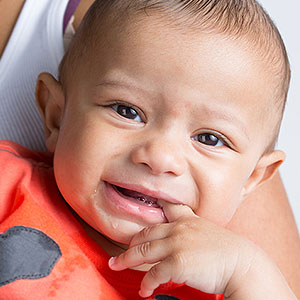
Your sweet, good-natured baby has seemingly gone from zero to grumpy overnight. The reason is simple: They’re teething.
Teething is a natural process in which a baby’s first teeth (primary teeth) begin to break through the gums, usually between six and nine months of age. This process continues intermittently until all twenty of the primary teeth erupt, sometime around age 3.
This uncomfortable and sometimes painful experience can cause gum swelling, biting and gnawing, chin rash and drooling. Your child may become irritable not only from this physical discomfort but also from disrupted sleep patterns and decreased appetite that often accompanies teething.
While you may have an unhappy baby while they’re teething, there’s usually no cause for concern. This is a natural process all children encounter, and the best thing you can do is make them as comfortable as possible. An exception would be accompanying diarrhea, fever or lingering crankiness—these could be symptoms of a more serious condition. If you begin to notice these, consult your doctor as soon as possible.
During teething there are a number of things you can do to reduce irritation. For one, allow your child to chew on clean, chilled (not frozen) teething rings, or a cold wet washcloth. The cold will help numb their irritated gum tissues. Massaging their gums with a clean finger can also help counteract the pressure caused by the incoming tooth.
If your doctor advises, you can also give your child over-the-counter pain relievers like acetaminophen or ibuprofen in an age-appropriate dosage. But be sure you give these medications orally and not rub them on the gums—some ingredients in them could burn the tissues. You should also not apply rubbing alcohol to the gums for the same reason. And avoid products with the numbing agent Benzocaine® in children less than two years of age unless your doctor advises otherwise.
Teething isn’t always a pleasant time for your baby or you, but it’s necessary—and temporary. In no time at all this discomfort will pass, and in its place will be their first set of teeth.
If you would like more information on teething, please contact us or schedule an appointment for a consultation. You can also learn more about this topic by reading the Dear Doctor magazine article “Teething Troubles: How to Help Keep Your Baby Comfortable.”