
Our Blog:
Archive:
- 2020
- 2019
- 2018
- 2017
- 2016
- 2015
Tags
- dental implants (12)
- crowns (3)
- celebrity smiles (54)
- loose teeth (1)
- tooth grinding (1)
- wisdom teeth (5)
- gum disease (10)
- periodontal disease (2)
- cosmetic dentistry (7)
- orthodontic treatment (14)
- anchorage devices (1)
- oral hygiene (19)
- pediatric care (1)
- dental sealants (2)
- gummy smile (1)
- teeth grinding (3)
- athletic mouthguards (1)
- porcelain veneers (3)
- cracked mouth (1)
- oral health (19)
- bad breath (1)
- teeth whitening (4)
- orthodontics (5)
- braces (5)
- tooth replacement (1)
- clear aligners (1)
- abscessed tooth (1)
- pediatric dentistry (11)
- bonding (1)
- teeth wear (1)
- dental emergency (1)
- dental injury (4)
- root canal treatment (8)
- dental injuries (1)
- partial denture (1)
- retainers (4)
- dental cleaning (1)
- veneers (2)
- chipped teeth (1)
- tooth decay (3)
- laser dentistry (1)
- toothache (1)
- bone grafting (2)
- tooth pain (2)
- antibiotics (1)
- gum recession (4)
- topical fluoride (1)
- baby teeth (1)
- tooth extraction (1)
- tooth loss (1)
- sensitive teeth (1)
- tads (1)
- mouthguards (2)
- shingles (1)
- facial pain (1)
- trigeminal neuralgia (1)
- diabetes (1)
- dental records (1)
- dry mouth (1)
- bridgework (1)
- chipped tooth (3)
- tooth wear (1)
- smile makeover (2)
- nutrition (2)
- extraction (1)
- dentures (2)
- teething (1)
- dental implant (1)
- oral heath (1)
- vaping (1)
- retainer (1)
- root canal (1)
- loose tooth (1)
Categories:
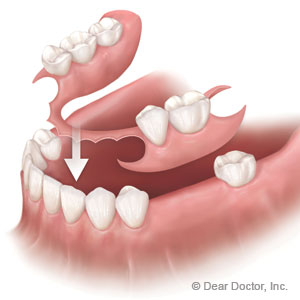
Dentures in one form or another have been around for centuries. Although dental implants have earned a well-deserved prominence of late, the denture still remains a viable tooth replacement option.
What's more, dentures aren't reserved for total tooth loss only. Even if you've lost just a few of your teeth, we can fit you with a removable partial denture (RPD). Although mainly considered a temporary solution for missing teeth, some people depend on an RPD for many years due to finances or other issues.
The traditional RPD consists of a rigid acrylic plastic base that resembles gum tissue supported by a metal framework, with prosthetic (false) teeth precisely placed to fill the space of the missing teeth. They're held in place with metal clasps that extend from the metal framework to fit over the remaining natural teeth.
Although they're an effective restoration, traditional RPDs have a few drawbacks. Some people find them uncomfortable to wear or have an allergy to the acrylic plastic. They also have a propensity to stain from beverages like tea, coffee or wine.
But there's a more recent version called a flexible RPD that addresses these and other concerns. It's made of a pliable nylon that's durable, yet comfortable to wear. Rather than metal clasps, they're secured in place with thin, finger-like nylon extensions that fit into the small, natural depressions in the crowns of the teeth around the gum line.
Flexible RPDs are also highly adaptable to appear life-like in many situations. We can fashion the nylon base to cover areas around natural teeth where the gums may have receded due to gum disease.
They do, however, have a few downsides. Unlike traditional dentures, they're difficult to reline or repair. Like any oral appliance, they can suffer from wear and neglect, so you must properly clean and maintain them. And, like any RPD their best role is as a temporary bridge rather than a permanent restoration.
In the meantime, though, you can count on a flexible RPD to restore your ability to eat and speak proficiently, as well as smile with confidence. It's a great affordable way to address a few missing teeth.
If you would like more information on dentures as a restoration option, please contact us or schedule an appointment for a consultation. You can also learn more about this topic by reading the Dear Doctor magazine article “Flexible Partial Dentures.”